
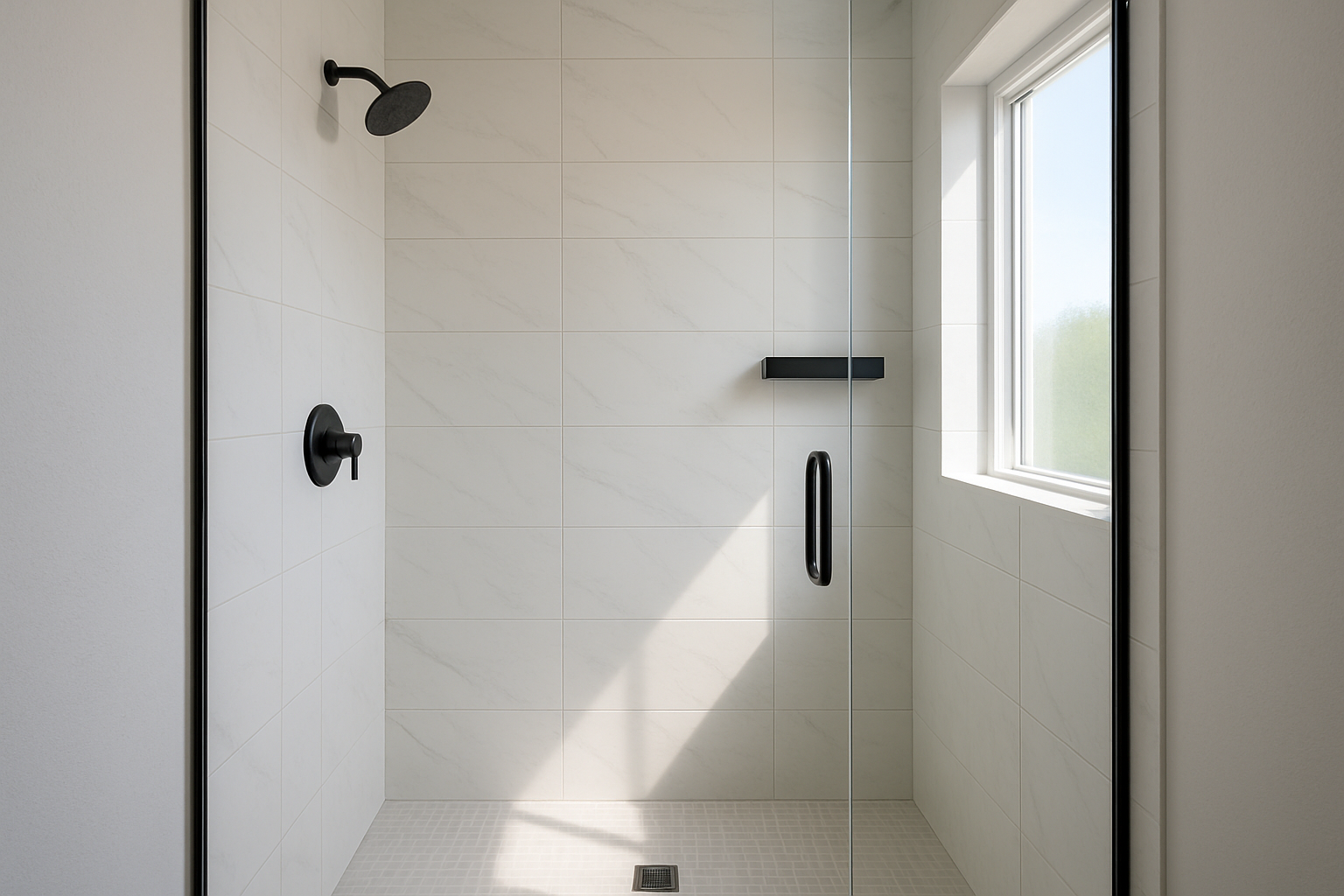
Modern bathroom tile isn’t just about picking a color you like. It’s a structural design decision that affects how a space feels, functions, and holds up over years of daily use. The right tile choice can make a small bathroom feel twice as large. Moreover, it can turn a builder-grade shower into a spa-like retreat. Additionally, it can anchor a whole-home renovation with a cohesive visual thread.
Table of Contents
- Why Tile Choice Defines the Whole Room
- Large-Format Bathroom Tile Ideas Modern Designs
- Texture, Finish, and the Slip-Resistance Factor
- Patterns and Layouts That Actually Work
- Material Breakdown: Porcelain, Ceramic, Stone, and More
- Color Palettes Trending in Modern Bathrooms
- Budget Considerations and Where to Spend More
Why Tile Choice Defines the Whole Room
Walk into any professionally renovated bathroom and the tile is almost always the first thing your eye lands on. That’s not accidental. Tile covers more surface area in a bathroom than any other single material. It includes the floor, shower walls, tub surround, and sometimes even the ceiling of a wet room. Every other finish in the room responds to the tile you choose first. Your vanity color, fixture finish, lighting, and mirrors all work with the tile.
This is why experienced contractors treat the tile selection conversation as an early-stage design conversation. It’s never an afterthought. When we work on bathroom renovations throughout Fairfield County, CT, we ask homeowners a key question first. What feeling do they want the room to produce? Do they want it calm and spa-like? Should it be graphic and bold? Would they prefer warm and natural? The answer almost always points directly to a tile category.
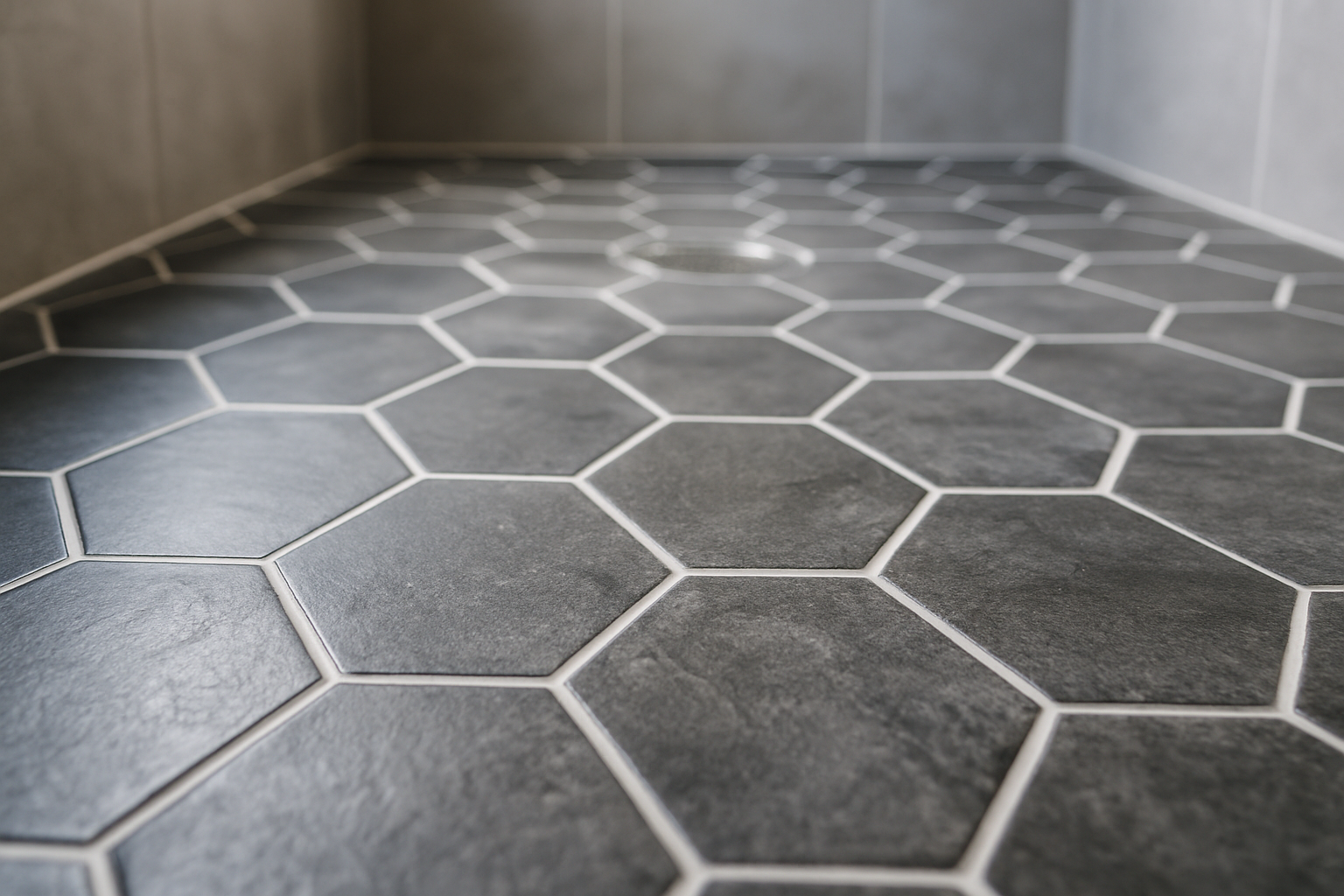
Modern design in particular relies on tile to create visual continuity. When the same tile or complementary tile runs from the floor up the shower walls, the bathroom reads as a unified space. It doesn’t feel like a collection of disconnected surfaces. However, that continuity is harder to achieve than it sounds. It requires planning the tile layout before anything else is ordered or installed.
Large-Format Bathroom Tile Ideas Modern Designs
If you’ve been browsing design accounts or walking through showrooms recently, you’ve probably noticed how dominant large-format tiles have become. Sizes like 24×48 inches and even 48×48 inches are now standard in high-end residential projects. Moreover, there’s good reason for this trend.
Fewer grout lines mean a cleaner, less busy visual field. In a small bathroom, this is especially valuable. Grout lines visually chop up the floor and make it harder for the eye to move smoothly across the surface. A large-format tile in a light color on a small floor can genuinely make the room feel bigger. This happens without changing a single square foot of actual floor space.
From a contractor’s perspective, large-format tiles require more precision. The substrate has to be perfectly flat. Any variance in the subfloor shows up as lippage between tiles. This is where the experience of your installation crew matters as much as the tile itself. Furthermore, porcelain large-format tiles are heavier and more brittle during cutting. Waste factors tend to run higher. On complex bathroom layouts with multiple angles, niches, and fixtures, plan for more material overage than you would with a standard 12×12 grid.
For homeowners in Fairfield County thinking about how tile selections fit into a broader renovation budget, our piece on custom home building cost per square foot fairfield county gives useful context. It shows how material-grade decisions ripple through total project costs.
Texture, Finish, and the Slip-Resistance Factor
Finish is one of the most overlooked variables in tile selection. It’s where a lot of homeowners make choices they later regret. The same tile body in a polished finish versus a matte or honed finish produces a completely different room.
Polished porcelain and glazed ceramic tiles reflect light beautifully. This helps in darker bathrooms or spaces with limited natural light. However, the trade-off is significant. Polished floors show water spots, soap residue, and footprints constantly. In a primary bathroom that gets daily heavy use, that maintenance burden adds up fast.
Matte and textured finishes have become the dominant choice in modern residential design. There are several reasons for this shift. First, they’re more forgiving of everyday use. Additionally, they photograph better for the increasingly common situation where homeowners want their homes to show well. Furthermore, they tend to age more gracefully than high-gloss surfaces.
For wet areas specifically, slip resistance is a code and safety requirement. It’s not just an aesthetic preference. The Americans with Disabilities Act (ADA) and various building codes reference the coefficient of friction (COF) for wet floor tiles. The Tile Council of North America (TCNA) recommends a minimum dynamic COF of 0.42 for wet areas. When we specify tile for shower floors or wet room floors in our projects, this is a non-negotiable part of the conversation.
Textured stone-look porcelain, small-format mosaic tiles, and naturally rough stone surfaces all perform well in wet zones from a slip-resistance standpoint. They still look intentional and designed.
Patterns and Layouts That Actually Work
The pattern you choose for a tile installation has as much visual impact as the tile itself. In fact, this is an area where working with an experienced contractor pays real dividends. Some pattern choices look stunning in a showroom photo but become incredibly difficult to execute cleanly in an actual bathroom. Bathrooms have corners, transitions, and plumbing penetrations.
Here are the layouts we see working consistently well in modern bathrooms:
- Stacked vertical bond: Running tile in a straight vertical stack rather than the traditional horizontal offset creates a tall, modern look. It works especially well on shower walls. This draws the eye upward and emphasizes ceiling height.
- Horizontal large-format running bond: A 33% or 25% offset (rather than the standard 50%) with large-format tile reduces the risk of lippage. It looks cleaner than a full brick pattern at large sizes.
- Herringbone: This classic pattern has come back strongly in modern bathrooms, particularly as a floor accent in smaller mosaic tiles. It also works as a feature wall in a shower niche. It adds movement without overwhelming the space.
- Book-matched slabs: For homeowners going with natural stone or large-format porcelain slabs, book-matching consecutive slabs is a high-end detail. When their veining mirrors across the seam, it reads as genuinely luxurious.
- Floor-to-ceiling continuous tile: Running the same tile from the shower floor up the walls and onto the ceiling of a wet room creates a cocoon effect. This reads as modern and deliberate.
One pattern to approach carefully is a true 50% offset brick pattern in large-format tiles. Most manufacturers and the TCNA specifically caution against this layout in sizes above 15 inches. The lippage risk it creates is significant.
Material Breakdown: Porcelain, Ceramic, Stone, and More
Not all tile materials perform equally in all applications. The differences matter more than most homeowners realize when they’re standing in a tile showroom.
| Material | Best Use | Key Advantage | Key Limitation |
|---|---|---|---|
| Porcelain | Floors, showers, wet rooms | Extremely durable, low water absorption | Harder to cut, higher install cost |
| Ceramic | Wall tile, dry areas | Budget-friendly, easy to work with | Higher water absorption, less durable |
| Natural Stone (marble, travertine) | Feature walls, floors | Unique veining, high-end look | Requires sealing, ongoing maintenance |
| Engineered Stone / Quartz | Shower walls, niches | Consistent pattern, no sealing needed | Less natural variation |
| Glass Tile | Accents, backsplashes | Reflective, colorful | Difficult to install correctly |
| Cement Tile | Decorative floors, accents | Unique patterns and color | Highly porous, needs regular sealing |
Porcelain remains the workhorse of modern bathroom renovations for good reason. It’s dense and nearly impervious to water. Additionally, it’s available in virtually every aesthetic. You can find highly convincing stone and wood looks in porcelain. Furthermore, it holds up under the wear that a family bathroom generates over years of use.
If you’re planning a full primary bathroom addition or a high-spec renovation in Connecticut, understanding how material choices affect overall project scope is essential. Our post on how much does it cost to build a custom home ct pricing guide provides useful framing. It shows how finish-level decisions affect total costs from the ground up.
Color Palettes Trending in Modern Bathrooms
The all-white bathroom isn’t going away. However, it has evolved considerably. Homeowners and designers now work with a much more nuanced palette. It goes beyond flat bright white toward warmer whites, creams, and greiges. These are often combined with a single accent material in a contrasting tone.
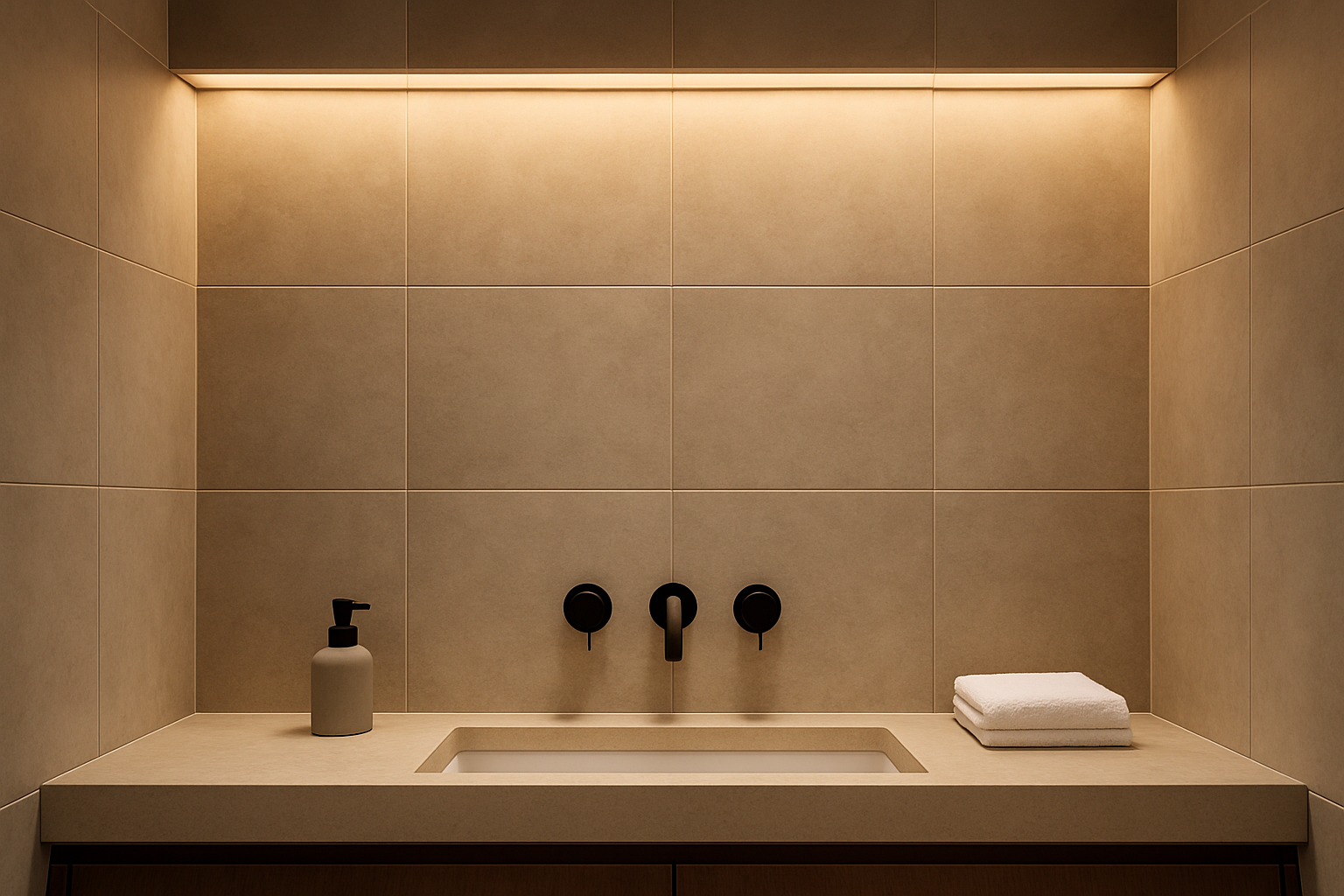
Warm neutrals with black accents: Warm beige or greige large-format porcelain floors paired with matte black fixtures and a white or cream wall tile is one of the most consistently requested looks. It reads as elevated without being trendy. As a result, it won’t feel dated in five years.
Deep tonal bathrooms: Forest green, charcoal, slate blue, and warm terracotta are all appearing in primary bathroom renovations as moody, intentional accent choices. These work best as a single feature wall. Alternatively, use them for a freestanding tub surround or a shower interior. More neutral tile carries the rest of the room.
Limewash and plaster looks: Plaster-look and limewash-look porcelain tile is one of the fastest-growing categories in residential tile. In addition to its visual appeal, it gives the warmth and texture of a plaster wall. It combines this with the durability and water resistance of glazed porcelain. Furthermore, it photographs in a way that feels organic rather than cold.
Grout color also belongs in this conversation. A contrasting grout color (dark grout on white tile, or white grout on dark tile) emphasizes the pattern and the grid. A tone-on-tone grout color reads as more seamless and contemporary. For most modern bathroom tile ideas, a tone-on-tone grout is the default choice. Use a contrasting grout only if you’re intentionally highlighting the pattern.
Budget Considerations and Where to Spend More
Tile budgets in bathroom renovations span an enormous range. Basic ceramic wall tile starts under $2 per square foot. However, premium natural stone or large-format porcelain slabs can run $15 to $30 per square foot or higher. This is before installation costs are included.
The installation cost is where many homeowners face surprises. A complex pattern, large-format tile, or natural stone installation in a bathroom with multiple angles and custom niches costs significantly more in labor. Compare this to a standard grid installation. Understanding the relationship between material cost and installation complexity upfront helps avoid budget surprises mid-project.
Our general recommendation when budgets are constrained is straightforward. Spend more on the tile in the highest-visibility locations. Focus on the shower wall and the floor. Select a simpler, less expensive tile for secondary walls. This concentrates the visual impact where it matters most without inflating the material cost across every surface.
Choosing the right contractor to execute your vision is equally important as the tile itself. Our post on how to choose the right contractor for kitchen remodel walks through the vetting criteria. These apply equally well to bathroom renovations. Moreover, if you want a clearer picture of what the full renovation process looks like before you commit, what to expect when working with home construction companies is a helpful starting point.
At Grain & Steel Contracting LLC, we’ve completed primary bathroom additions and full gut-renovation bathrooms. We’ve also built luxury wet rooms across Danbury, Ridgefield, Westport, Greenwich, and throughout Fairfield County. Our longstanding relationships with tile suppliers, waterproofing specialists, and finish tradespeople set us apart. We can take a bathroom from concept to a finished, functional space without the coordination gaps that often slow projects down. When a homeowner brings us a tile direction they love, we build the layout, substrate, and installation plan around it. We don’t do it the other way around.
Plan Your Bathroom Renovation with Grain & Steel
Things to Know
- Grout joint width affects both the look and the long-term maintenance of your tile installation. Larger joints (1/8 inch or more) are more forgiving on uneven substrates. However, they collect more grime. Rectified tiles, which are precision-cut to exact dimensions, allow tighter joints that read as cleaner and more modern.
- Waterproofing the substrate is a separate step from installing the tile itself. Many tile failures and mold problems in bathrooms trace back to inadequate waterproofing behind the tile. This isn’t a tile or grout problem. A proper modern installation uses a dedicated waterproofing membrane. It doesn’t rely on cement board alone.
- Not all porcelain tile rated for floors is rated for wet shower floors. Always check the manufacturer’s published COF (coefficient of friction) rating. Use this for any tile you plan to use in a wet shower floor application. A beautiful floor tile that doesn’t meet the wet COF threshold cannot legally or safely go inside a shower.
- Tile selection should happen before you finalize your plumbing rough-in locations. The position of fixtures, drains, and niches should coordinate with your tile layout. This ensures cuts land in logical places. It prevents an awkward interruption of the tile pattern by a drain centered in the wrong spot.
- Heated floor systems (electric radiant mats or hydronic) need specification before tile installation begins. Don’t add them after. Retrofitting a heated floor under existing tile is a full demolition job. If you’re already renovating, this is the right time to add it.
- Large-format tiles typically require a lippage tolerance check during installation. The TCNA’s Handbook for Ceramic, Glass, and Stone Tile Installation publishes specific tolerances. Any reputable contractor should reference these during a high-spec bathroom project.
Key Takeaways
- Tile is the single highest-impact material decision in a bathroom renovation. It covers the most surface area and sets the visual tone for every other finish in the room.
- Large-format porcelain tiles reduce grout lines and simplify cleaning. They also make small bathrooms feel more spacious. However, they require a flatter substrate and more precise installation than standard-size tiles.
- Slip resistance is a safety and code requirement for wet floor tile. It’s not just a design preference. Always verify the COF rating before specifying any tile for a shower floor.
- Pattern layout and grout color have as much visual impact as the tile itself. Tone-on-tone grout and vertically stacked bonds are two of the most reliable choices for a clean, modern result.
- Material selection should be driven by where the tile will be installed. Porcelain is the most versatile and durable all-around choice. Meanwhile, natural stone and cement tile require ongoing maintenance commitments.
- Your tile selection should lock in early in the design process. Do this before plumbing rough-in locations are finalized. This allows the layout to coordinate around fixture and drain placement.
Start Your Bathroom Renovation with a Team That Gets the Details Right
A well-tiled bathroom doesn’t happen by accident. It takes coordinated planning across design, substrate prep, waterproofing, and installation. Every one of those steps needs handling by people who’ve done it at a high level before. At Grain & Steel Contracting LLC, we bring that full-process expertise to bathroom renovations throughout Fairfield County, CT.
Connect with Grain & Steel to plan your bathroom renovation and talk through your tile direction, layout goals, and project scope with a contractor who treats the details seriously. Reach out today by calling 914-217-0255 or emailing grainsteelinfo@gmail.com. Let’s build something worth stepping into every morning.
Start Your Bathroom Renovation
Frequently Asked Questions
Q: What tile size works best for a small bathroom?
Large-format tiles in light colors are generally the best choice for small bathrooms. Fewer grout lines create a more open, continuous visual field.
When you reduce the number of grout lines on a floor, the eye travels across the surface more smoothly. This makes the room feel less segmented and more spacious. A 24×24-inch or 24×48-inch tile in a warm white, cream, or soft greige tends to perform best in tight spaces. Furthermore, pair it with tone-on-tone grout and you amplify that effect considerably.
Q: How do I choose between porcelain and natural stone for my bathroom?
Porcelain is the lower-maintenance, more durable choice for most bathrooms. Natural stone offers unique visual character but requires regular sealing and more careful upkeep.
Natural stone tile, including marble, travertine, and limestone, is porous and will stain or etch without regular sealing. In a high-traffic family bathroom, that maintenance commitment requires careful consideration. For a primary bathroom or a low-traffic guest bath where aesthetics are the priority, natural stone can be worthwhile. However, for showers and wet room floors in everyday-use bathrooms, porcelain with a stone look gives you most visual benefits without the vulnerability.
Q: Can I use the same tile on the floor and the shower walls?
Yes, and using the same tile across multiple surfaces is one of the most effective ways to create a cohesive, modern bathroom design.
Running a continuous tile from the floor into the shower and up the walls reduces visual breaks in the space. This makes the room feel larger and more intentional. The main consideration involves finish. A textured or matte version of a tile for the floor (for slip resistance) can pair with a smoother or polished version of the same tile on the walls. Confirm with your contractor that the floor tile meets COF requirements for wet areas before specifying it for a shower floor.
Q: How much does bathroom tile installation typically cost in Connecticut?
Bathroom tile installation costs in Connecticut vary significantly based on tile material, pattern complexity, and the size and condition of the space being tiled.
Basic ceramic tile installation in a straightforward layout typically costs less than complex large-format porcelain or natural stone installation. Custom niches, heated floors, and intricate patterns add to the labor costs. Labor costs in Fairfield County reflect the higher cost of living and the skill level required for high-spec residential work. Material costs range from under $2 per square foot for basic ceramic to $30 or more per square foot for premium stone or large-format porcelain slabs. Getting a detailed, itemized quote from a licensed contractor before committing to a tile direction is most reliable. This helps you understand your actual project budget.
Q: Do I need a permit to retile a bathroom in Connecticut?
Retiling bathroom surfaces only, without moving plumbing, walls, or electrical, typically doesn’t require a permit in most Connecticut municipalities. However, this varies by town and project scope.
If your bathroom renovation involves relocating a drain, moving plumbing supply lines, adding a new electrical circuit for heated floors, or making structural changes, permits become necessary. Connecticut’s State Building Code governs these thresholds. Individual municipalities may have additional requirements on top of the state baseline. A licensed and insured contractor familiar with your specific town’s building department—such as Grain & Steel Contracting LLC throughout Fairfield County—will know what triggers a permit requirement. They can pull the necessary permits on your behalf as part of the project.