

What Affects the Cost to Build a Custom Home in Fairfield County
Every homeowner who has looked into building a custom home has run into the same frustrating answer: it depends. And while that answer is technically correct, it is not very useful when you are trying to plan a budget, talk to a lender, or decide if a custom build even makes financial sense for your family right now.
The truth is that cost-to-build pricing in Fairfield County does not vary at random. There are specific variables that drive every estimate. Homeowners who understand them upfront make better decisions and avoid costly surprises during construction.
Once you understand those variables, it becomes much easier to compare builder estimates, avoid unrealistic square-foot pricing, and make confident decisions before construction begins.
WHAT’S IN THIS GUIDE
QUICK FACTS
✔ Fairfield County custom homes often cost $350 to $600+ per square foot.
✔ Lot conditions can add major costs before construction starts.
✔ Finishes are the biggest owner-controlled budget variable.
✔ Soft costs often add 10% to 15% of hard construction costs.
✔ Use a line-item estimate, not just a per-square-foot number.
How Much Does It Cost to Build a Custom Home?
Fairfield County is one of the most expensive construction markets in Connecticut, and Connecticut itself ranks among the highest-cost states in the country for residential building.
Houzeo reports Connecticut home construction at roughly $250 per square foot for standard builds, before land and higher-end custom variables.
That spread exists because a “custom home” is not one fixed product. A 2,800-square-foot colonial on a flat, utility-ready lot costs very differently than a same-size home with vaulted ceilings, custom millwork, a spa bathroom, and engineered site prep on a sloped Ridgefield lot.
The square footage is the same. Almost nothing else is.
Factors That Affect the Cost to Build a Custom Home in Fairfield County
1. The Lot: Your First and Often Largest Variable
Before a single wall goes up, the land your home sits on can dramatically shift your total project cost. This is the variable homeowners most frequently underestimate in the cost of building a custom home.
Several site-specific conditions can add tens of thousands of dollars to your budget before construction even begins:
- Topography and grading: A sloped or heavily graded lot requires more excavation, retaining walls, and engineered foundation solutions. A difficult lot can add $30,000 to $150,000 or more to your project budget.
- Soil and subsurface conditions: Rocky, unstable, or high-water-table soils require engineered solutions such as helical piers, deeper footings, or specialized drainage systems. You will not know what you are dealing with until a soil test is done.
- Utility access: Building on undeveloped land often means no public water or sewer connection is available. A well and septic system installation can run $15,000 to $40,000 or more, depending on soil percolation results and local health department requirements.
- Wetlands proximity: Connecticut environmental regulations are strict. Building near wetlands triggers additional permitting, setback requirements, and review periods that add both cost and time.
- Standard land preparation: Even on a manageable lot, grading, clearing, and site prep typically add $10,000 to $40,000 to the project before foundation work starts.
Before committing to land, have a builder, civil engineer, or site professional review the property. Raw land that looks like a deal on paper sometimes carries site conditions that flip the economics entirely.

2. Scope and Size: How Square Footage and Layout Complexity Shape Your Budget
Square footage matters, but layout efficiency matters just as much.
A clean two-story design with a stacked floor plan, where plumbing and mechanical systems align vertically between floors, is significantly more efficient to build than a single-story home with the same total square footage.
Long and linear homes, L-shaped footprints, or designs with multiple rooflines all add framing complexity, labor hours, and material cost. The more complicated the structure, the higher the price per square foot.
Other scope decisions that move the budget:
- Number of stories: A two-story home is generally more cost-efficient per square foot than a sprawling single-story plan because the foundation and roof costs are distributed across more living area.
- Ceiling heights: Vaulted ceilings, two-story foyers, and coffered ceilings increase both framing and material costs.
- Basement type: A finished basement effectively adds an additional floor to the project. An unfinished basement with rough-ins for future finishing is more budget-conscious but still adds cost over a slab foundation.
- Attached or ancillary structures: Garages, covered porches, and accessory structures add to the total scope even when they feel secondary to the main home.
For most Fairfield County custom home projects in the 2,500 to 4,000-square-foot range, budget planning should account for the full project footprint, not just the interior finished square footage, and should factor structural complexity in from the design phase.
3. Finish Level: Where Most of Your Budget Goes
The finish level is where homeowners often have the most control over the final number. Two homes with identical floor plans and lot conditions can differ by $200,000 or more based purely on finish selections.
| Finish Tier | What It Includes | Typical Cost Range (Fairfield County) |
|---|---|---|
| Builder-grade | Stock cabinetry, laminate counters, vinyl flooring, standard fixtures | $200-$275/sq ft |
| Mid-range | Semi-custom cabinetry, quartz counters, hardwood flooring, upgraded tile | $275-$400/sq ft |
| High-end/Luxury | Custom millwork, natural stone, radiant heat, smart home systems, designer fixtures | $400-$600+/sq ft |
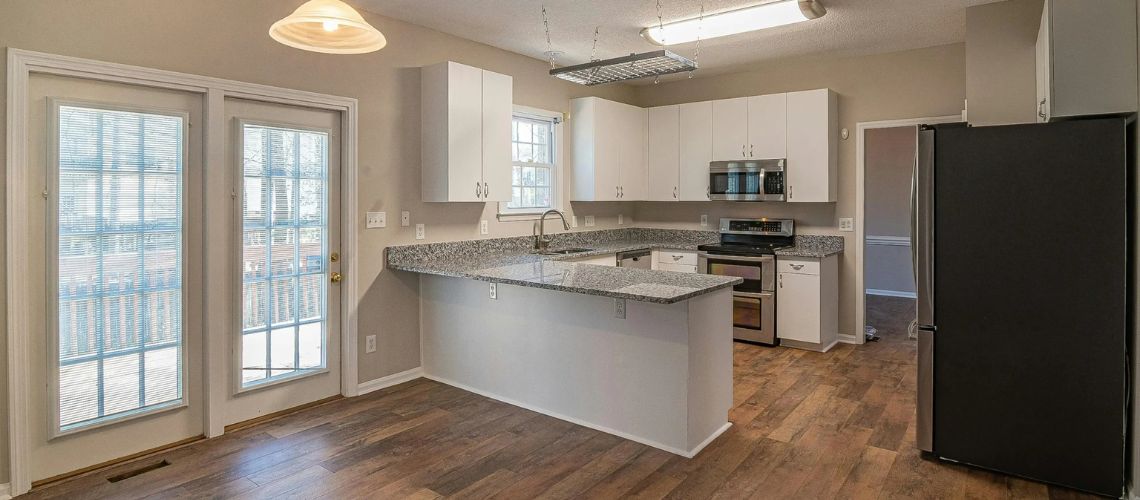
Kitchens and primary bathrooms are the spaces where finish-level decisions carry the most budget weight. A mid-range kitchen and a luxury kitchen in the same footprint can differ by $50,000 to $150,000, depending on cabinetry, countertops, appliances, and custom details.
The same logic applies to primary bathrooms, where heated floors, custom tile work, freestanding soaking tubs, and frameless glass enclosures add up quickly.
4. Permits, Architecture, and Design Fees
Soft costs are often underestimated because they do not feel as visible as framing, roofing, or finishes. Still, they are part of the total investment.
Architectural fees in Connecticut may be structured as a percentage of total construction cost, commonly between 5% and 15%. A complete set of construction drawings for a custom home represents a significant investment on its own, and it is not optional. Connecticut building departments require stamped architectural plans for new residential construction.
Permits and inspections generally range from $1,000 to $5,000 for residential construction in Connecticut, though towns with more complex zoning overlays or higher impact fees can push this higher. If your lot is near wetlands or in a regulated area, additional environmental review fees apply.
Engineering fees for structural, civil, or geotechnical work are separate from architecture costs and are especially relevant on challenging sites.
A reliable planning benchmark: budget 10% to 15% of your hard construction cost for soft costs covering design, engineering, permits, and related professional services. This is a number that catches many homeowners off guard when it does not appear in early contractor conversations.
5. Labor Costs in Fairfield County
Connecticut labor rates are among the highest in the country, and Fairfield County consistently runs at the top of that range. Skilled tradespeople, including electricians, plumbers, HVAC technicians, and finish carpenters, command a significant premium in this market, and general contractor overhead reflects the cost of doing business here.
Choosing the lowest labor bid can create risk on a custom home, especially when the project involves detailed finish work, local inspections, complex scheduling, and high expectations for quality.
How to Budget for a Custom Home Build: Step-by-Step
Step 1: Assess the Lot Before Finalizing a Design
Review topography, soil, drainage, access, utilities, wetlands, and zoning before finalizing a design. Have a builder or civil engineer evaluate any site conditions that could affect cost.
Step 2: Define Your Program and Square Footage
Determine how many bedrooms, bathrooms, and primary living spaces you need. Decide on single-story versus two-story and how that decision affects your priorities.
Step 3: Establish Your Finish Tier Early
Identify whether the project is standard, mid-range, or luxury before architectural drawings are finalized.
Step 4: Engage an Architect
Custom architectural drawings are the foundation of every other cost conversation. Your builder bids from them, your permit office approves them, and your bank underwrites against them.
Step 5: Get a Detailed, Line-Item Builder Estimate
A credible builder should be able to provide a line-item estimate based on your actual drawings and finish schedule, separating site work, foundation, framing, mechanicals, exterior materials, interior finishes, allowances, and soft costs.
Step 6: Build in a Contingency
A 10% to 15% contingency on hard construction costs is standard practice on custom builds in high-cost markets. Unforeseen site conditions, material lead times, and design changes are common, and a contingency protects the project.
Frequently Asked Questions (FAQs)
What is the difference between a custom home and a semi-custom home?
A custom home is designed from scratch around your floor plan, layout, and finish preferences. A semi-custom home starts with a builder’s existing plan that can be modified within set limits, making it faster and usually more affordable.
How do construction loans work for a custom home build in Connecticut?
Most custom homes use a construction-to-permanent loan. Funds are released in stages during construction, then the loan converts to a standard mortgage once the home is complete.
How do property taxes work for a newly built custom home in Connecticut?
Connecticut municipalities generally assess real property at 70% of fair market value, then apply the local mill rate. Once the home is complete, taxes are based on the finished home’s value, not just the land.
Can design or scope changes be made after construction has started?
Yes, but changes after construction starts usually increase cost and can delay the project. Finalizing floor plans, structural details, and finishes before permitting is the best way to protect the budget.
What questions should I ask a custom home builder before hiring them in Fairfield County?
Ask about similar completed projects, subcontractor management, change orders, billing schedules, budget communication, and Fairfield County references. Local experience matters because permitting, site conditions, and trade relationships vary by town.
Start Your Custom Home Build With the Right Partner
If you’re exploring a custom home build in Fairfield County, the next step is a conversation with a builder who knows this market, understands what it takes to build here, and can give you honest, experience-based guidance from the first call.
Grain & Steel Contracting LLC is a family-owned, licensed, and insured general construction company serving Fairfield County, including Danbury, Bethel, Stamford, Greenwich, Ridgefield, Norwalk, Westport, and surrounding areas.
Contact us today.